How to Identify Genuine Leather: A Customer's Honest Guide
The label says 'genuine leather' — but that might be the lowest grade available. Learn the real tests, the grading system, and the red flags that separate true leather from imitation, before you spend your money.
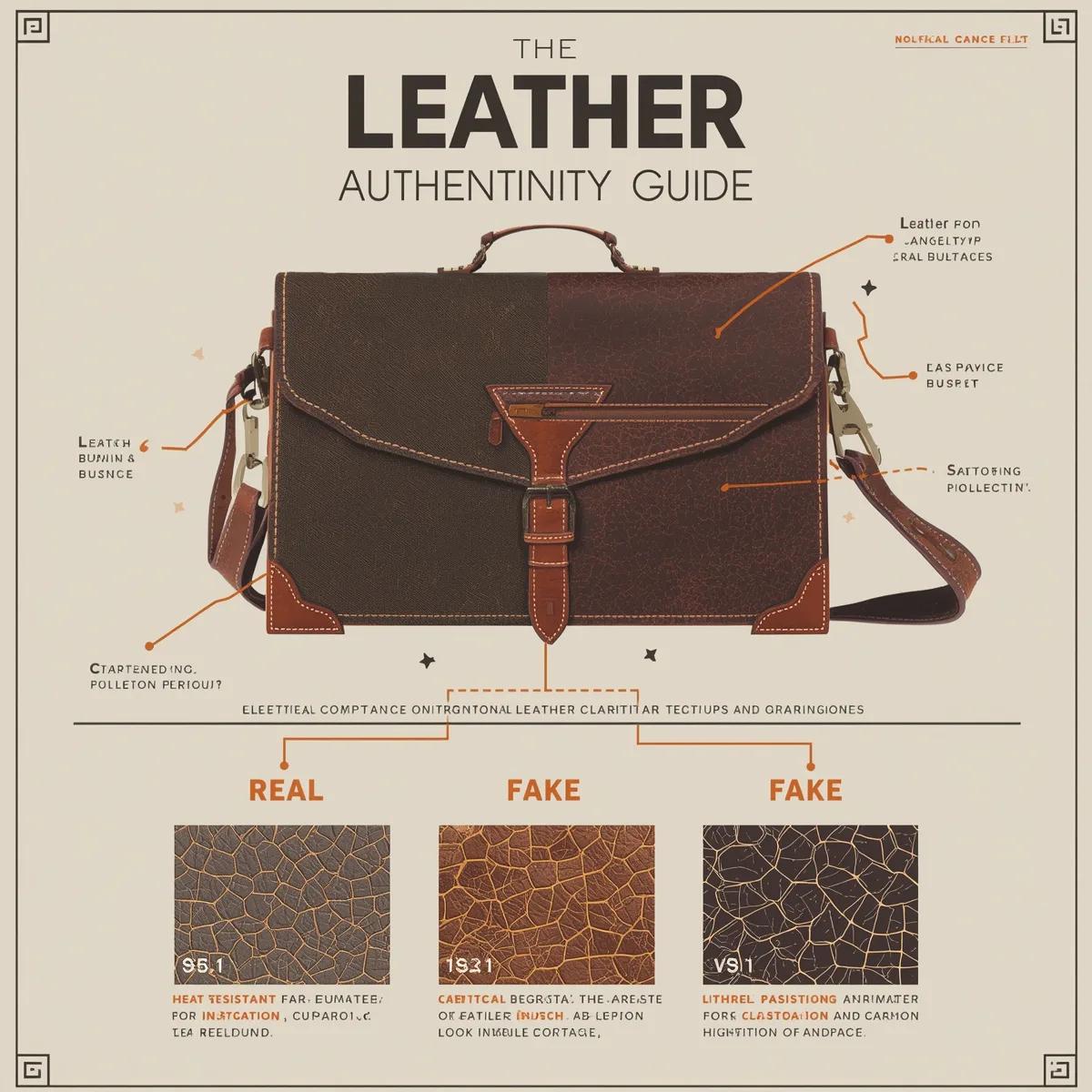
How to Identify Genuine Leather: A Customer's Honest Guide
Here is something the leather industry rarely says out loud: "Genuine Leather" is a grade label — and it is the lowest grade of real leather.
That is not a typo. When a product is stamped "Genuine Leather," it means the manufacturer is legally allowed to call it leather, but it is almost certainly split leather — the fibrous inner layer left behind after the prized top surface is removed for higher-grade goods. It is real leather in the same way that reconstituted wood is real wood.
Before you can spot fake leather, you need to understand the grading system. Then the tests make sense.
The Leather Grading System
Full-Grain Leather
The top surface of the hide, completely unaltered. Natural grain, pores, scars, and markings are visible. This is the strongest, most durable leather available. It develops a rich patina over time. High-end wallets, saddles, and premium bags are made from this.
Top-Grain Leather
The top surface, but sanded or buffed to remove imperfections, then usually embossed with a uniform grain pattern. More consistent in appearance than full-grain. Slightly weaker because the dense outer layer is partially removed. Used in most mid-range leather goods.
Genuine Leather
The layer beneath the top grain, called the split. Thin, weak, and prone to peeling. Usually coated with polyurethane to simulate the look of real leather. This is what fills most "leather" goods in mid-market retail. It will not age — it will flake.
Bonded Leather
Leather scraps and dust, ground up and glued to a backing with polyurethane. Typically 10–20% leather fiber by weight. Looks convincing at first. Peels aggressively within one to two years. Common in budget furniture and cheaply branded accessories.
PU / Vegan Leather
Fully synthetic. No animal material. Can be well-made or poorly made depending on the manufacturer. A good PU leather is honest about what it is. A bad one imitates real leather while charging real leather prices.
The Tests
Now that you know what you are looking for, here are the tests that work — ranked from most to least reliable.
1. The Edge Test (Most Reliable)
Turn the product over and look at any exposed edge — the edge of a wallet flap, a belt cut, the rim of a bag strap.
- Real leather (full-grain or top-grain): The edge is rough, fibrous, and slightly uneven. You can see the layered structure of the hide — it looks like a cross-section of dense fabric. It may be burnished smooth, but the underlying texture is visible.
- Genuine leather / bonded leather: The edge shows a fabric-like backing layer (often brown or beige) with a thin coated surface on top. Clean, suspiciously perfect edges with a visible two-layer sandwich.
- Synthetic: Clean, uniformly colored edges. Often has a plastic sheen at the cut.
This test works on every leather product. Do it every time.
2. The Grain Test
Look at the surface pattern under good light, ideally with a loupe or phone camera zoomed in.
- Full-grain: Irregular, organic pore patterns. No two sections look identical. Occasional small scars or marks — these are features, not defects.
- Top-grain: More uniform than full-grain but still slightly irregular. A very faint repeating pattern may be visible if it was embossed.
- Synthetic / bonded: A perfectly uniform, repeating grain pattern. Every pore is the same size, in the same formation. It looks like a tile pattern. This is the most obvious visual tell on bags and shoes.
3. The Smell Test
Real leather has a distinctive, organic smell — sometimes described as earthy, slightly musky, or woody. This comes from the tanning process.
- Chrome-tanned leather (most commercial leather) has a clean, slightly chemical smell that fades over time.
- Vegetable-tanned leather has a richer, more organic smell.
- Synthetic leather smells like plastic — a chemical, artificial odor that does not go away.
Note: Some heavily finished leathers have had their smell largely suppressed by coatings. Smell alone is not conclusive. But a strong plastic smell is always a red flag.
4. The Touch and Temperature Test
Press your palm against the surface for five seconds.
- Genuine leather: Warms to your hand temperature. Real leather breathes and conducts warmth.
- Synthetic: Stays at room temperature, or feels slightly cool and waxy. Does not respond to your body heat.
Leather also has a slight give under pressure — it yields and then returns. Synthetics tend to feel hollow or uniformly rigid.
5. The Water Drop Test
Place a small drop of water on an inconspicuous area.
- Real leather (uncoated or lightly coated): Absorbs the water slightly, darkening the spot for a few minutes before fading back.
- Heavily finished real leather: Beads slightly but eventually absorbs.
- Synthetic: Water beads completely and rolls off. No absorption at all.
Note: Many high-quality leathers are sealed with a light finish that will also bead water. Do not use this test alone. It is best used alongside the edge test.
6. The Burn Test (Only When Possible)
This is destructive, so it is only practical with a small offcut or on the underside of a strap.
- Real leather: Burns slowly, curls slightly, smells like burning hair or skin (organic protein). The ash is dark and crumbles.
- Synthetic: Melts rather than burns, may drip, smells strongly of chemicals or burning plastic. Can produce black smoke.
You will not do this test in a shop. But if you buy materials for leatherwork, or are evaluating a supplier sample, this is the most definitive test available.
Red Flags When Shopping
Price: Full-grain leather wallets do not cost ৳500. Full-grain leather bags do not cost ৳2,000. If the price seems impossible for the material claimed, trust the price.
"Genuine Leather" label on a premium item: As established, genuine leather is a low grade. A brand charging premium prices on a genuine leather label is making a calculated bet that you will not know the difference.
Perfect uniformity: Real animal hide is not uniform. Any surface that looks machine-perfect across its entirety is not full-grain leather.
Peeling on older stock: Ask to see a display model or demo product that has been handled. Real leather does not peel. If there is any flaking, bubbling, or surface separation, it is bonded leather or poorly finished genuine leather.
No information on tanning method: Reputable leather brands know and state their tanning method — vegetable-tanned, chrome-tanned, brain-tanned. Brands that say only "genuine leather" or "real leather" with no further specification are usually hiding something.
What Good Leather Brands Will Tell You
A trustworthy leather brand should be able to answer:
- What grade of leather? (Full-grain, top-grain)
- What tanning method? (Vegetable, chrome)
- What country of origin for the hide?
- What finish is on the surface?
If a brand cannot answer these questions, their leather is probably not worth the premium they are charging.
At Wafaa, we use full-grain vegetable-tanned leather on all our products. We say so because it is what separates our goods from the majority of the market — and because you have a right to know what you are buying.
Summary: The Two-Test Rule
If you only remember two things from this guide:
- Look at the edge. Fibrous and irregular = real. Clean sandwich = fake or genuine grade.
- Read the label critically. "Genuine Leather" is the lowest real-leather grade. "Full-Grain" is what you want.
Everything else confirms what these two already tell you.
Wafaa makes leather goods from full-grain, vegetable-tanned hides. If you have questions about materials, email us — we answer.